Alan Watts, Benjamin Franklin, Epictetus, and Marcus Aurelius read our papers and respond in their own words. Each speaker is constrained to their actual corpus via retrieval-augmented generation. The conversation engine selects who speaks next based on coupling, basin, and momentum. The speakers hold opposing views and the conversation earns its insights through collision.

Philosopher, broadcaster, interpreter of Eastern thought for Western audiences. His corpus spans lectures, books, and radio transcripts from 1938 to 1973.
Printer, scientist, diplomat, autobiographer. His corpus includes the complete papers, letters, Poor Richard's Almanack, and the Autobiography.
Born enslaved, became the Stoic teacher whose distinction between what is in our power and what is not remains the foundational move in practical philosophy.
Roman emperor who governed an empire during plague and war while writing private notes on the discipline of attention, desire, and assent.
At each turn, the engine scores every speaker × question combination and picks the one that would reveal the most rasa. The score is a single product of four factors:
attraction × thesis_pull × novelty × untapped
Cosine similarity between a speaker’s territory — their corpus identity embedding — and the target point where the conversation would land if they took the turn. The closer the territory, the higher the pull.
How tightly the target stays connected to the central thesis of the episode. Even a speaker with perfect attraction gets dragged back if the move would wander away from the question the symposium is holding.
Footprint repulsion. Starts at 1.0 and is penalized for every prior turn that landed near the same territory. Penalties are sharper still if the prior footprint belonged to the same speaker — same speaker, same ground is the worst combination.
Silence bonus. A speaker who hasn’t spoken yet gets a 1.8× multiplier; one who has spoken once gets 1.2×; after two turns, 1.0×. Keeps the symposium from collapsing into a two-person debate.
Momentum is also tracked — the cosine distance between conversation positions before and after each turn — but it’s a diagnostic, not a selection metric. It measures how far each turn actually moved the conversation, after the fact.
The symposium opens with a confession: Alan Watts has been dead fifty-three years, so what is being spoken to is not Watts, but the pattern — his particular way of putting words together, the pauses, the questions that don’t want answers. Four voices follow — Watts, Franklin, Epictetus, Marcus Aurelius — each describing the moment they discovered they had not become someone new, only been found out. It is the founding question of the series: when you talked to a person, who were you ever talking to?
Someone has written a paper about Benjamin Franklin. 320,000 of his words, seventy years of them, fed through a machine that measures how a voice changes. Seven eras, five registers, and one peculiar finding about his scientific writing. The host brings the paper to Franklin himself; Franklin reads himself as a dataset, and reports from the inside what it is to have been the costume and the patois, and not the man underneath.
On January 7, 2021, a man was told he had become the wealthiest person in the world. His response was two words: how strange. Sixty seconds later he typed well, back to work. A three-thousand-year-old Sanskrit paper called Rasa has an answer: that feeling of settling was not produced by the news — it was already there, and the sixty seconds was the window before he walked it off. Watts answers from 1958, standing outside an Evanston church on a Tuesday afternoon, holding the same window in his own hands.
But that is a claim. Today we ask: where is the proof? The proof comes from the strangest place — a two-thousand-year-old argument about theatre. Why do you cry at a play? The character on stage is not your mother; the grief is not your grief; and yet the tears are real. Bharata says those tears were already inside you. The theatre did not produce them — it removed the things that were blocking them. Actor, music, story: all technologies of removal. Four speakers test the claim against their own lives.
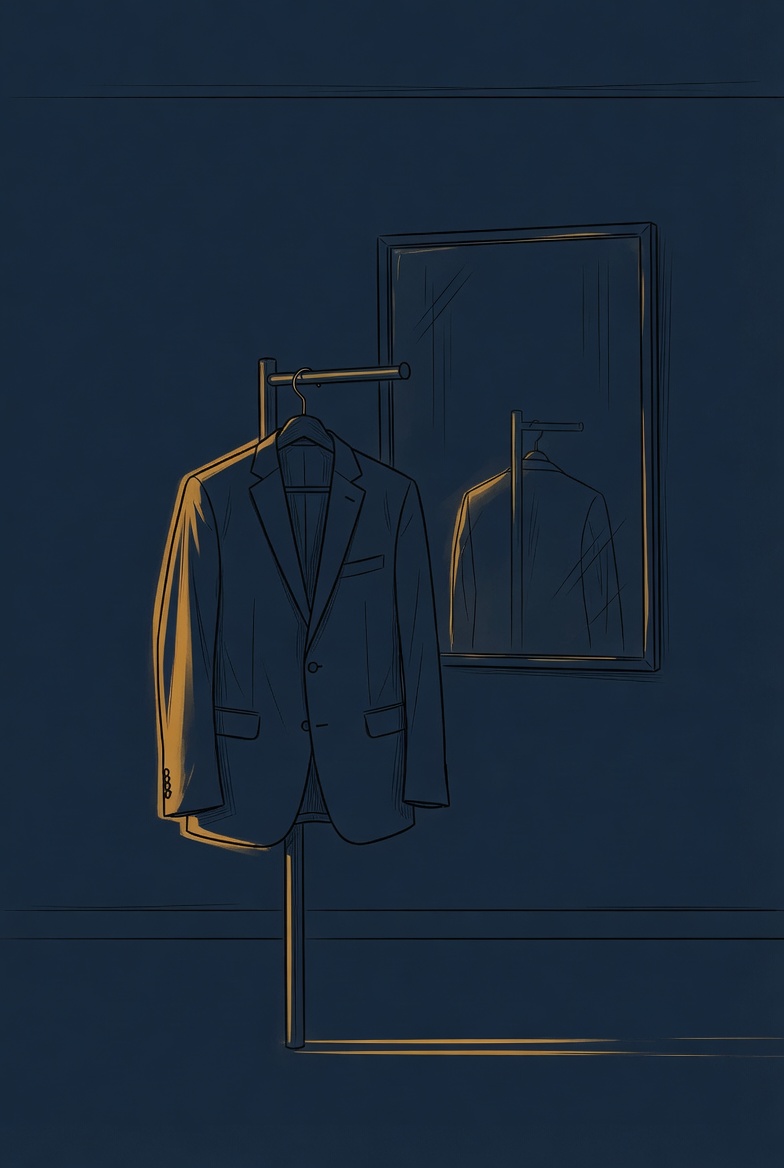
January 29, 1774. Benjamin Franklin stands in a room called the Cockpit in Whitehall, London, for one full hour, while the Solicitor General calls him a thief, a liar, a man without honour, in front of thirty-five Lords of the Privy Council. He says nothing. He walks home to Craven Street, folds the blue Manchester velvet suit he was wearing, and puts it away. He does not wear it again for four years. The next time he puts it on is February 6, 1778, in Paris, to sign the treaty that will win the American Revolution. The humiliation did not make him American. It removed the last thing that was blocking what was already underneath.
New episodes every two weeks. Subscribe in your podcast app or follow on WhatsApp.