Why shipping fast with AI coding doesn't have the feeling of rightness.
Fiat lux – Let there be light. Western thought begins at this moment – creation willed from nothing, which is an act reserved for God. The words are spoken, and a world unfolds in response.
But now, we have the Prompt. Let there be paragraphs, lines of code, images, and sounds – unfolding from a prompt. No special qualifications are needed to create, just the will to write a prompt. And with this power, you shipped more code last month than in any month of your career. The AI wrote most of it, which means the tests pass and the deploys are green. It feels fast but it also feels dead and you don't have a word for why.
Have we merely conjured luxury – "Prompt luxe" instead of lux, muzak instead of music, opulence instead of light?
One letter separates the two. And in that one letter, a civilization is deciding what it wants to be.
Wasteland. That is the honest word for what we are building at scale. Vast wastelands of competent prose. AI-generated code that compiles but cannot bring the reader to tears – unless they are debugging it. Applications that function the way strip malls function: every store is open, every sign is lit, and you feel nothing walking through them.
We find ourselves in the land of the dead. Ersatz bread. Ersatz cheese. Ersatz code, ersatz connection, ersatz meaning. Consider the Oreo – a food so thoroughly engineered that even eukaryotes refuse to digest it. Mold won't touch it. Bacteria pass it over. The simplest organisms on earth, creatures with no brain and no consciousness, can taste the difference between alive and dead. They reject the Oreo.
We eat it by the sleeve. When even single-celled organisms have better taste than you, something has gone very wrong with your tasting apparatus.
When even single-celled organisms have better taste than you, something has gone very wrong.
We have been handed the power to create, and what we have created is an algorithmic world that does not sustain, does not satisfy, and does not feel right at all. The Ishavasya Upanishad opens with a vision of reality enveloped in the divine – every corner of existence saturated with essence, the way syrup saturates a jalebi. We have built a world with the same shape as that vision and none of its saturation. Fried dough in the shape of sweetness. Pick it up. Bite in. Empty.
And we went from "prove you're not a robot" to "prove you're a human." The ways people are reaching for proof – adding typos to their prose, roughing up their output, factory-distressing their writing the way jeans are factory-distressed – are themselves fake. Simulated humanity. Wabi sabi as a styling choice. The imperfection is performed, not lived, and readers can smell it.
By April 2026, the discomfort had a name. Mat Honan in MIT Technology Review called it the era of AI malaise. "We're all sitting uncomfortably with AI right now," he wrote. "Most people say AI makes them nervous."
The real proof of humanness was never a typo. It's taste. And taste has a name.
The Indian tradition called it rasa – taste, essence, flavor. Not metaphorical taste. The actual experience of savoring something that has quality, the way you taste a perfectly ripe mango and your whole body knows. The Taittiriya Upanishad makes the claim plainly: raso vai sah – the ultimate reality is itself rasa. The universe, at bottom, is an aesthetic container. Everything in it was meant to be tasted.
When was the last time anything you built tasted like anything?
The tech industry is arguing about the wrong question. Is AI making developers faster or slower? In 2025, METR ran the most rigorous randomized controlled trial of AI coding tools to date. Developers believed they were 20% faster with AI assistance. They measured 19% slower. A 39-point perception gap. The industry took this as evidence that the tools need improvement. But the gap isn't in the tools. It's in the tasters.
Mario Zechner – a game developer with decades of experience – published a post in early 2026 that went viral within hours: "Slow the fuck down." His diagnosis was precise. Developers using AI were shipping faster and building worse, and the two facts were connected. Thousands of developers shared it within days. The nerve was exposed.
But Mario diagnosed the symptom, not the disease.
So did Cal Newport, writing in the New York Times this same week, warning that digital technology is degrading our ability to think – that we are feeding our brains "digital Doritos" and losing cognitive fitness the way a sedentary generation lost physical fitness. Newport is right. The attention crisis is real. But attention is the capacity to stay with something. Taste is the capacity to know whether what you're staying with is worth anything. You can have perfect deep-work discipline and build a beautiful strip mall.
Shakespeare saw this four centuries ago: "The sweetest honey is loathsome in his own deliciousness, and in the taste confounds the appetite. Therefore love moderately: too swift arrives as tardy as too slow." Excess doesn't merely diminish pleasure. It confounds the appetite – it breaks the tasting apparatus itself.
Speed is a virtue when you are going somewhere. Velocity requires direction. And what passes for velocity in AI-assisted development has none. Slowness isn't the answer. Focus without discernment isn't the answer either.
The variable was never speed.
The variable is taste.
The variable was never speed. The variable is taste.
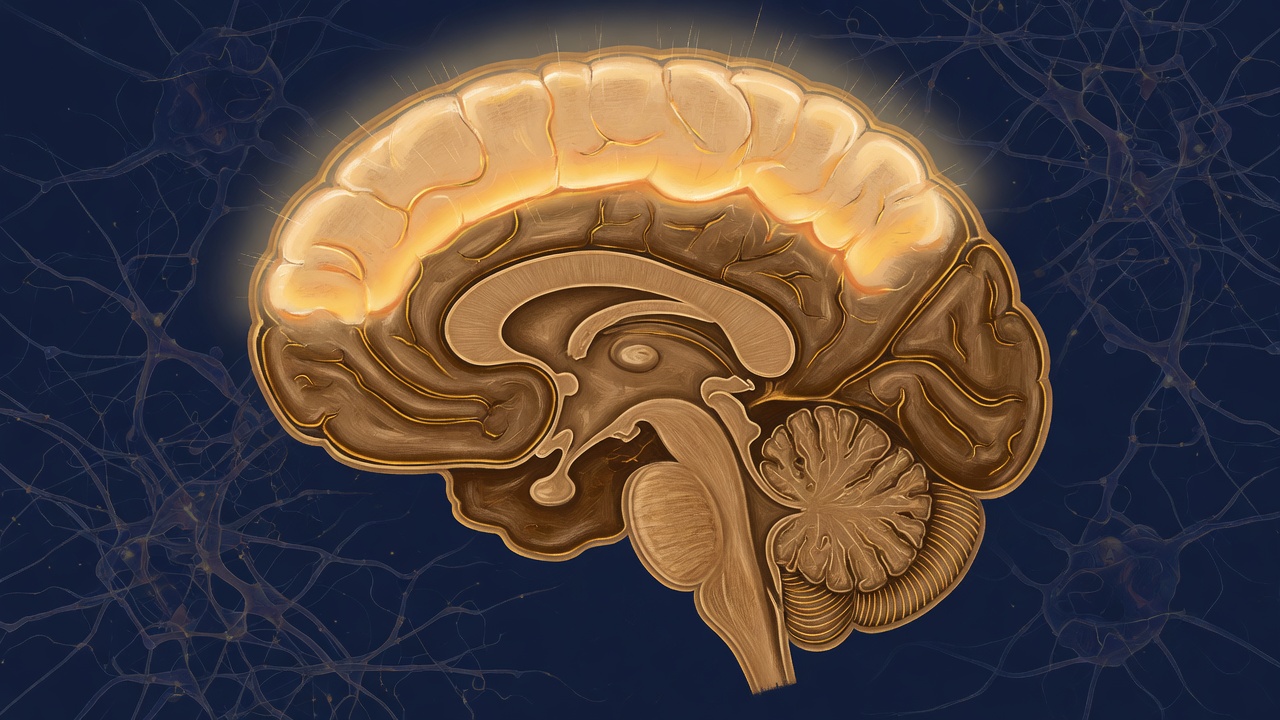
There is a specific region in your brain that does this work. Neuroscience has been mapping it for two decades.
When Semir Zeki put mathematicians in an fMRI scanner and showed them proofs, the ones they rated as beautiful activated the medial orbitofrontal cortex — a region just behind the eyes that responds to beauty in any domain. Music. Faces. Landscapes. Code. It's domain-general. It doesn't care what medium the beauty arrives in. It is the brain's quality detector.
Edward Vessel pushed the finding further. During peak aesthetic experiences, the brain's default mode network activates – the network of self-referential processing. Beauty, at its most intense, doesn't just please you. It feels like it's about you. Something inside recognizes itself in what it's seeing.
Cattaneo made the case causal. Disrupt this region with brain stimulation and aesthetic judgment degrades. Enhance it and ratings go up. Not a nice-to-have. The mechanism.
Henri Poincaré understood all of this a century before the scanners existed. In his 1908 lecture on mathematical creation, he proposed that the unconscious mind generates vast numbers of combinations and that aesthetic sensibility acts as a sieve – only the beautiful ones cross into awareness. The useful combinations, he wrote, are precisely the most beautiful. Beauty doesn't decorate truth. It selects for it.
Rick Rubin plays no instruments. Cannot read music. Doesn't operate the mixing board. He has produced some of the most important albums of the last forty years – Johnny Cash, Beastie Boys, Red Hot Chili Peppers, Adele, Jay-Z – across every genre and decade. His one capacity is taste. He sits in the room and knows when it's right. Not how to make it right. When it is right. The producer as taster, not generator.
The producer as taster, not generator. That is the developer's actual job in the age of AI.
That is the developer's actual job in the age of AI. Not writing code. Tasting it.
And here is how AI coding culture is destroying the brain region that does the tasting.
Evelina Ivanova's research at MIT established that coding activates the fronto-parietal executive network – the multiple-demand system for complex problem-solving, working memory, and sustained attention. AI-assisted coding doesn't reduce this load. It transforms it. Instead of writing code, the developer now evaluates, integrates, debugs, and manages a ceaseless stream of machine-generated suggestions. The executive network stays maxed out, hour after hour, day after day.
This matters because of what Amy Arnsten, Bruce McEwen, and Ivanka Savic have documented across decades of research: chronic cognitive overload physically degrades the prefrontal cortex. The tiny neural connections called dendritic spines retract. Gray matter thins. The brain region where aesthetic judgment lives shrinks under the very conditions that AI-assisted velocity culture produces.
The causal chain is clean and it is ugly. AI coding loads the brain's analytical network beyond sustainable limits. Sustained overload degrades the prefrontal cortex. The prefrontal cortex is where taste operates. Therefore velocity culture, sustained long enough, destroys your capacity for quality judgment.
But the neuroscience is only half the story. There is a second, subtler loss – one that no scanner can detect.
When you hand-code, you feel your way through the codebase in braille. Every branch, every conditional, every edge case passes through your nervous system on the way to the screen. You don't need a separate evaluation step because the evaluation is happening through your fingertips. Touching and knowing are the same act.
The moment AI writes the code, that contact is severed. You're no longer reading in braille. You're looking at a printed page someone else typeset. You can read it, but you can't feel it. The tactile feedback loop – the one where your taste shaped the code as it was being written – is gone. Nothing replaced it except speed.
The braille reader was handed a screen and told to go faster.
So what you lose isn't just the capacity for taste. You lose the occasion for taste. Hand-coding gave you taste for free – you couldn't write a line without feeling your way through it. AI coding took that away and gave you nothing in return except volume. The braille reader was handed a screen and told to go faster.
And code that was never touched by human taste on its way into existence – code that was prompted, generated, and accepted without ever passing through a nervous system – has no way to carry rasa. It wasn't created in anyone's image. It was assembled from statistical likelihood. It can be correct. It cannot be alive.
But worst of all – worse than the degradation, worse than the severed contact – we have lost the ability to know the difference between the living and the dead.
What could have been obvious from a tingling in the nerves, a felt vitality, a life force in the work – we no longer feel it. We can't know whether the code we've committed is alive or merely functioning. Whether the words we've published carry meaning or merely parse. Whether the images that seem so vivid are also so soulless.
The emptiness that follows cannot be filled with speed. Or money. Or influencer fame. Or lines of code. Or repositories. Or side quests. Or zombie projects that generate commits while going nowhere.
Real artists ship. This is true and often quoted. What is less often said: so do fakes – perhaps faster. The GitHub contribution graph doesn't distinguish between them. The sprint velocity chart can't tell them apart. The only thing that separates the living from the dead is taste – the felt sense that this particular thing has quality, that it was discovered rather than assembled, that it gives back more than the question asked for.
Real artists taste what they ship.
The emptiness is a container, and it has a specific shape. It can only be filled by one substance: aesthetic taste, grown through practice, protected through discipline. Nothing else fits. You can pour velocity into it and money into it and commits into it and it stays hollow, the way that jalebi without syrup stays dry no matter how long you fry it.
And yet. Here is the turn the doomsayers miss.
We are living through a Cambrian explosion of creative possibility. The barrier to building hasn't been lowered. It has been removed. A musician can ship a SaaS product. A yoga teacher can build a production application. A twelve-year-old can prototype what would have taken a team of engineers two years ago.
The tools are not the problem. The tools are magnificent – the most powerful creative medium ever handed to human beings. The problem is what we are bringing to the medium. Velocity instead of vision. The habits of the assembly line applied to a tool that rewards the habits of the studio.
Who built the Taj Mahal? Shah Jahan, we say – and he never lifted a brick. Never shipped the marble. Never chiseled a surface. He provided two things only: the vision and the taste. At every junction, he said this, not that. The workers were the efficient cause. Shah Jahan was the final cause – the telos, the one whose aesthetic judgment made the Taj Mahal the Taj Mahal rather than another marble building. The labor was necessary. It was never sufficient.
Every developer on earth is now in Shah Jahan's position. An infinite workforce that can execute anything, on command, for free. The question is no longer can you build it? The question is: do you have the taste to commission a Taj Mahal, or will you build another strip mall? And if you were trained in the strip mall economy – if your entire apprenticeship was prompt-to-output, faster iteration, more features, ship ship ship – then a strip mall is all you know how to ask for. Not because the tools can't build cathedrals. Because you've never tasted one.
The cost to create is now near zero. But the quality that makes something come alive – what gives it polysemy, the ability to carry multiple meanings, to elegantly solve many things at once, to give you back more from the answer than the question intended – that was never in the cost equation. The 80% is free now. Anyone gets the 80%. The question is what separates the 80% from the thing that sings.
This is your swadharma – a Sanskrit word meaning your own path, the contribution only you can make. Not your ability to code faster than the next person. That advantage is gone forever. What remains is your particular aesthetic sensibility – the specific way you recognize quality in your domain. AI handles the generic. The human brings the specific. But we must master the medium, not be mastered by it. The relationship runs in one direction: taste leads, the machine serves.
Anyone can create now. Just bring two things: context and taste.
And taste must be cultivated. Not restored – that implies you had it and lost it. Taste isn't a possession that gets stolen. It's a capacity that grows through deliberate practice, the way a groove deepens through repetition. The Sanskrit word is sanskar – the imprint of habit. Every time you accept mediocre output without flinching, you carve a groove. Every time you stop, examine what the machine gave you, and say no, this isn't right – I know what right looks like, let me show you – you carve a different groove. The way in is also the way out.
Our tastebuds, our sensitivity to the life force in things, our intuition — like late-summer fruits still on the vine, they have been bitten, bug-infested, browned by overexposure to the algorithmic sun. But the vine is alive. The roots go deep. Conor Liston's research demonstrated that stress-induced brain degradation reverses in four weeks. One month of reduced cognitive load, and neural connections regrow. Gray matter returns. Your capacity for quality judgment recovers — if you let it.
Recovery is only the beginning. The real work is cultivation.
Boundaries: ninety-minute sessions, aligned with the body's natural attention rhythm. Darwin worked three focused sessions a day and produced the most consequential body of work in the history of biology. The boundary protects the environment in which taste operates.
Practice: not coding practice – tasting practice. Expose yourself to systems that have quality. Read architecture that sings. Sit with solutions that feel inevitable and ask what makes them right. A sommelier doesn't learn taste by drinking more wine. They learn it by drinking better wine, slowly, with attention.
Lifestyle: taste is the result of how you live. How you begin the morning. How you enter work. What you protect. What you refuse. The developer who opens Slack before taking a breath has loaded the analytical brain before the quality-sensing brain has woken up. The sequence matters.
But most importantly: the question isn't whether to make or to taste. The question is whether you can learn to do both in the same gesture – to code the way a musician plays, hearing and shaping in the same breath. When you hand-coded, this happened automatically. Your taste was in your fingers. Now that the machine writes the code, the tasting has to become deliberate – not a review step at the end, but a way of being present throughout the making. Conducting, not reviewing. Shaping the output in real time, the way Shah Jahan shaped the Taj Mahal without touching a single brick.
This is what Rasakrit is for – rasa (taste, essence) + krit (one who makes). Not a productivity system. A method for cultivating taste while working with AI at full power. The practice of mastering the medium rather than being mastered by it.
I have one proof that this works. It is small and personal and it is mine.
Four thousand five hundred commits in ten months. Solo. AI-assisted from the first line to the last. Zero burnout. Joy scores of 8 to 10, tracked daily, across the entire span.
The commits are not the proof. Anyone can ship over four thousand commits. The fakes ship too – perhaps faster.
The proof is that I can still taste what I build. Ten months in, the feeling of rightness is intact. I know when the architecture is elegant and when it's merely correct. I know when the AI has given me something alive and when it's given me a strip mall. The judgment holds. The sieve operates. The vine still bears fruit.
I've been writing about this for nine years, since before AI coding tools existed. In 2017, I wrote a note called "Grow Taste" – about cultivating the capacity to savor, about the difference between a gold-flaked ice cream cone and the real thing, about maintaining a "taste nursery" the way you'd tend a garden. That note had nothing to do with code.
It had everything to do with code. The crisis of beauty isn't a developer problem. It's a human problem that developers are experiencing first because their tools changed fastest. But the jalebi without syrup is everywhere – in the prose, in the music, in the feeds, in the relationships conducted through interfaces optimized for engagement rather than meaning.
We have been given the power of gods. The cost of creation has fallen to zero. The canvas is infinite. We can build anything.
To create, we must possess more than the power. We must possess the will – not the will to produce, which is cheap now, but the will to discern. The will that reveals itself in music that moves us beyond explanation. In buildings that breathe. In conversations where something true passes between two people. In beauty itself – not beauty as decoration, but beauty as the signature of life.
Our first act of infinite creation must be ourselves. We must make ourselves into carriers of taste. Not lotus eaters, not navel gazers – builders. Builders who have cultivated the capacity to fill infinite worlds with light instead of landfill.
Rasa, it turns out, was always our raison d'être. The capacity to taste is not a luxury of the contemplative life. It is the irreducible human variable – the one thing that cannot be automated, cannot be prompted, cannot be faked. It can only be grown, tended, and protected. And in an age when everything else about creation has become free, it is the only thing that still costs something: attention, discipline, a life shaped around the willingness to feel.
The strip malls can give way to cathedrals. The feeling of rightness – that ancient, full-body recognition that this is it, this is what it was supposed to be – can return. But it won't arrive through a better prompt or a faster model or a longer context window.
Fiat rasa.
Let there be taste.
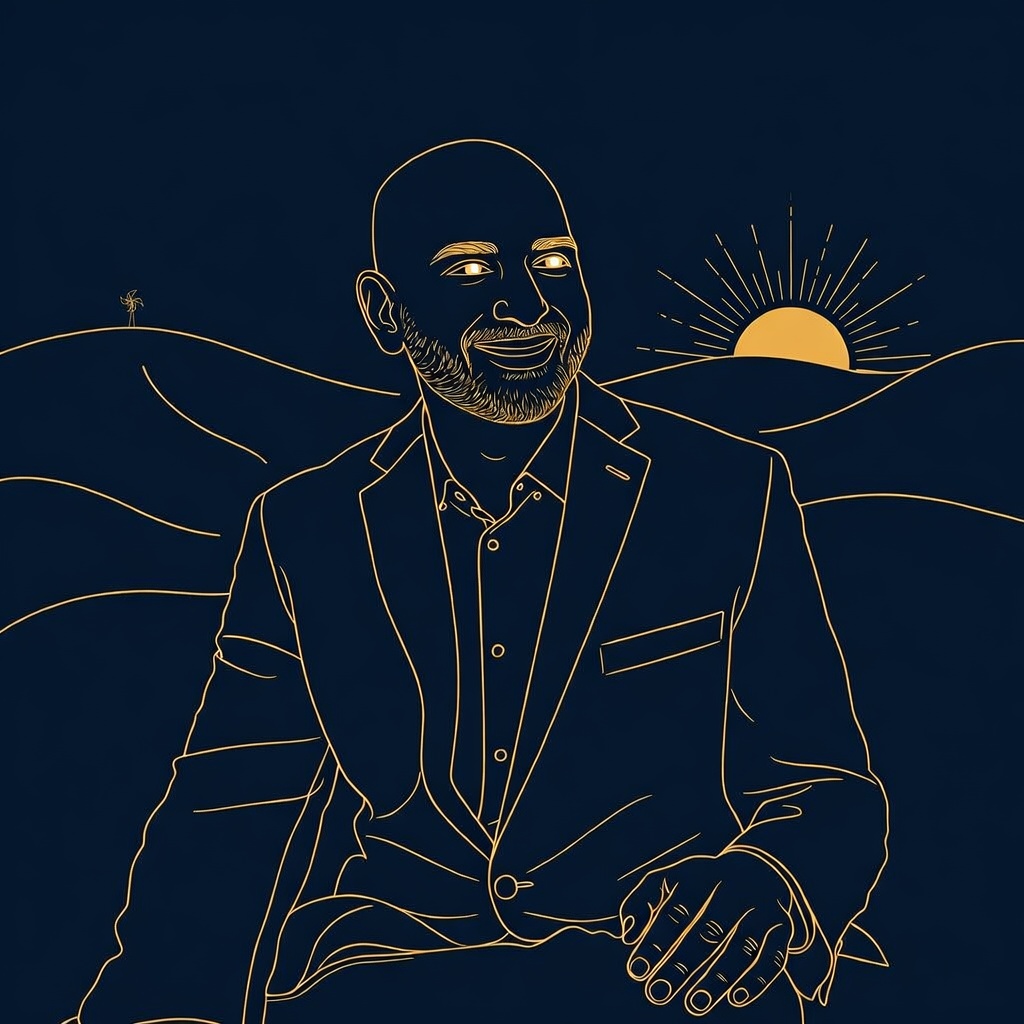
Gaurav Rastogi is an E-RYT 500 yoga teacher a former Infosys executive, co-founder of Infinote (acquired 2020), faculty at IIM Ahmedabad and Ashoka University, an Oxford University Press author, and a Graduate Theological Union board member. He builds Rasakrit – a methodology for contemplative AI development – from a garage in the San Francisco Bay Area. He can be reached at ekrasworks.com.