The intellectual depth behind the practice.

Every paper here answers one question: why does a metal coin in your hand reverse what AI velocity culture did to your brain?

Gaurav Rastogi · ekrasworks · 2026

The architecture of the Good Space.

The science of taste. The practice of flow.

Rasa as the ground of being.

The architecture of knowing in an age of infinite surplus.

Three axes of the same structure: SAT (reality concordance), CIT (awareness of surplus coherence), ANANDA (the mattering that makes synthesis meaningful). The cycle is helical, not circular. Each pass adds altitude.

The brain under AI velocity culture.

An interactive map of the neural regions affected by chronic AI-assisted development without contemplative practice. See what degrades, what compensates, and what the protocols restore.

Executive Taste Reward Threat Alert | Bright = active Dim = quiet = spines retracting
Click any dot. Face is on the right – "prefrontal" means front of the brain.
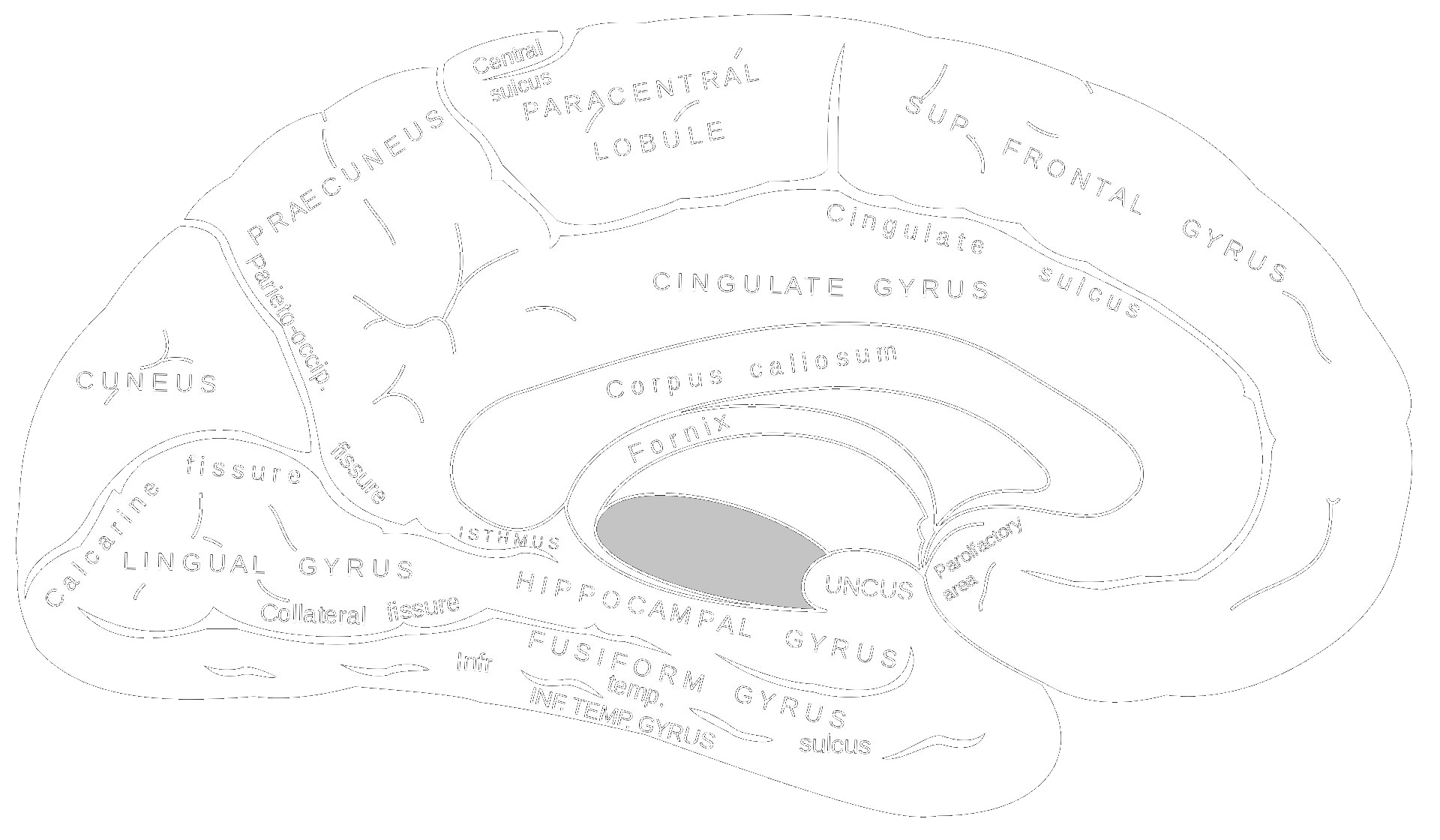
Gray's Anatomy plate 727: brain regions
dlPFC · Taskmaster
IPS · Spatial organizer
ACC · Alarm bell
Striatum · Reward
vmPFC · Meaning
Amygdala · Threat
mOFC · Taste organ

dlPFC · Taskmaster

Dorsolateral prefrontal cortex
Executive function, working memory, error monitoring, context management.
The feeling of holding five things in your head at once — variable names, function signatures, the shape of a data flow. When this region is strong, you feel sharp. When it's degraded, you re-read the same line four times and still lose the thread.

IPS · Spatial organizer

Intraparietal sulcus
Holds the architecture in mind. Mental rotation, spatial reasoning, multiple demand network.
The sense of seeing the whole system at once — modules, dependencies, data paths. You can rotate it in your head, zoom in and out. When this fades, you can only see the line you're on. The map collapses to a dot.

ACC · Alarm bell

Anterior cingulate cortex
Conflict detection, error signals, autonomic arousal. Rings when something is wrong.
That nagging feeling something is off. The twitch before you find the bug. When it's fatigued, you stop noticing. You merge the PR with a knot in your stomach but you can't locate why.

Striatum · Reward

Ventral striatum & nucleus accumbens
Dopamine center. Lights up at "aha" moments, aesthetic chills, the feeling when code is right.
The hit when tests pass green. The chill when an elegant solution clicks. When this goes quiet, shipping feels like nothing. You finish a feature and feel no different than when you started.

vmPFC · Meaning

Ventromedial prefrontal cortex
Default Mode Network hub. Self-relevance, values, meaning-making. The "why" center.
The quiet voice that says this matters, this is mine, this is worth doing well. When this region thins, you stop caring about the work. Not angry, not sad — just empty. The code ships but nobody's home.

mOFC · Taste organ

Medial orbitofrontal cortex
Zeki's beauty center. Fires for math, music, art, elegant code. The organ of taste.
The part of you that knows good from great. That winces at a hack and relaxes at a clean interface. Zeki found it fires identically for a beautiful equation and a beautiful painting. When it withers, everything looks the same. You lose taste.

Amygdala · Threat

Amygdala
Fear and urgency center. Survival mode. Under stress, grows while other regions shrink.
The spike of panic when the deadline moves up. The tightness when Slack lights up. Under chronic stress, this region physically grows — more dendrites, more connections, more reactive. Everything feels urgent. You code from adrenaline instead of insight.

Brain: Gray's Anatomy plate 727 (1918). Public domain. Illustration: Patrick J. Lynch, CC BY 2.5.

The science we stand on.

The peer-reviewed studies and foundational work that ground the Rasakrit methodology. These aren't window dressing — each one does structural work in the argument.

Journal of Neuroscience, 2009
Stress-Induced Alterations in Prefrontal Cortical Dendritic Morphology Predict Selective Impairments in Perceptual Attentional Set-Shifting
Liston, C., McEwen, B.S., Casey, B.J.
Chronic stress causes measurable dendritic spine retraction in the mOFC. Critically, the damage reverses within ~3 weeks after the stressor is removed. This is our biological basis for claiming recovery is possible and fast.
Read on PubMed
NeuroImage, 2011
Naturalizing Aesthetics: Brain Areas for Aesthetic Appraisal Across Sensory Modalities
Brown, S., Gao, X., Tisdelle, L., Eickhoff, S.B., Liotti, M.
Meta-analysis of neuroimaging studies places aesthetic processing in the gustatory cortex and mOFC. The brain literally processes beauty through the same circuits it uses for taste. Not a metaphor — anatomy.
Read on PubMed
Nature Reviews Neuroscience, 2009
Stress Signalling Pathways that Impair Prefrontal Cortex Structure and Function
Arnsten, A.F.T.
Comprehensive review of how stress hormones (catecholamines, glucocorticoids) impair prefrontal cortex function. Maps the exact pathways through which chronic stress degrades executive function and judgment.
Read on PubMed
PLoS ONE, 2008
Neural Substrates of Spontaneous Musical Performance: An fMRI Study of Jazz Improvisation
Limb, C.J., Braun, A.R.
Jazz improvisation involves deactivation of the dlPFC (self-monitoring) while activating the mPFC (self-expression). Creativity requires letting go of executive control — the neurological basis for the Dhyana Gate.
Read on PubMed
eLife, 2022
Is Coding a Relevant Metaphor for the Brain?
Brette, R.
The computational vocabulary used to describe brains was originally borrowed from neuroscience, embedded in machines, then re-imported to describe brains as inferior computers. The circularity at the heart of the "brain as computer" metaphor.
Read on eLife
Science Advances, 2025
Nyayanga: Earliest Oldowan Stone Tool Transport
Plummer, T.W., et al.
At Nyayanga, Kenya, 2.6 million years ago, hominins selectively transported high-quality cobbles up to 13 km. The earliest evidence of landscape-scale planning and the precision grip that defines our lineage.
Read on Science
Annual Review of Psychology, 2014
Flow and the Foundations of Positive Psychology
Csikszentmihalyi, M., Nakamura, J.
The foundational framework for understanding flow states — the balance between challenge and skill, loss of self-consciousness, and intrinsic motivation. The psychological basis for 90-minute session structure.
Read paper
American Psychologist, 1999
Implementation Intentions: Strong Effects of Simple Plans
Gollwitzer, P.M.
If-then implementation intentions bypass effortful decision-making by creating automatic responses to situational cues. The cognitive basis for the "policies over rules over choices" principle in Focus & Finish.
Read paper

Dispatches from the practice.

Threads, observations, and field notes from building Rasakrit in public.

Gaurav's tweets about Flow Coding, Brain Fry, and the emotional transmission hypothesis will appear here once connected.

Follow @ekrasworks on X →

Dive deeper into the movement.

The full essay, the neuroscience foundation, and the path to restoring taste in your work.

Continue Reading
About Gaurav Rastogi →

What the world is saying.

The evidence is converging. Researchers, developers, and industry leaders are all pointing at the same thing — velocity culture is breaking something that matters.

Loading Kokoro...