
You accept a suggestion, it looks right, you move on. Somewhere in that move the pause where you used to ask 'is this good?' went missing. Here is what four teams found when they went looking.
In April 2026, MIT Technology Review named the era: AI malaise.
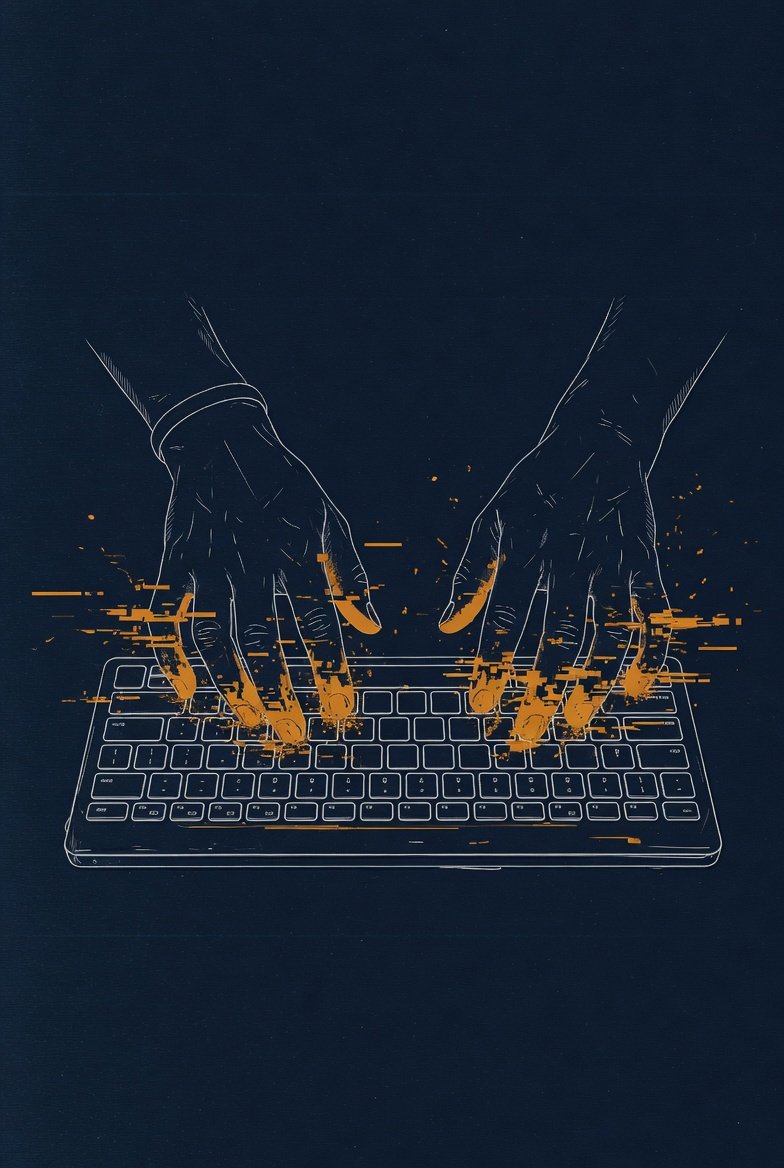
Four teams looked at what AI tools do to the people using them: a randomized trial, an EEG study and two large surveys.
METR randomized trial, 16 experienced open-source developers, 2025
MIT Media Lab EEG preprint, 54 participants, 2025
BCG and UC Riverside survey, 1,488 US workers, HBR 2026
Stack Overflow Developer Survey, 2024 vs 2025
Arnsten (2009) reviewed what sustained stress does to the prefrontal cortex, the part of the brain that weighs your options. In lab studies, mostly in animals, the connections between its neurons thin out. Whether a day of AI coding counts as that kind of stress is an open question. In those rats the connections grew back gradually once the stress ended.
Find any object on your desk: a pen, a mug, a paperweight. Something with texture and weight. Hold it in a precision grip (thumb against forefinger) while you read through the AI-generated code you're about to approve.
The grip is there to slow you down long enough to read the line you were about to skip.
Take the Brain Fry AssessmentAny pen will do. The coin is for people who want it daily. Try it for a week and notice whether you still approve code you haven’t read. The papers below are why I think it works.
Liston, McEwen and Casey (PNAS, 2009) scanned medical students in the weeks before a major exam and again a month after it. Under exam stress the students were slower to shift attention, and the prefrontal networks that do that work were less well connected. A month after the exam, with the stress gone, both had recovered.
A working developer’s exam rarely ends, so the practical question is where a low-stress pause fits in the working day. The free protocol above is one answer; the coin makes it a daily one.
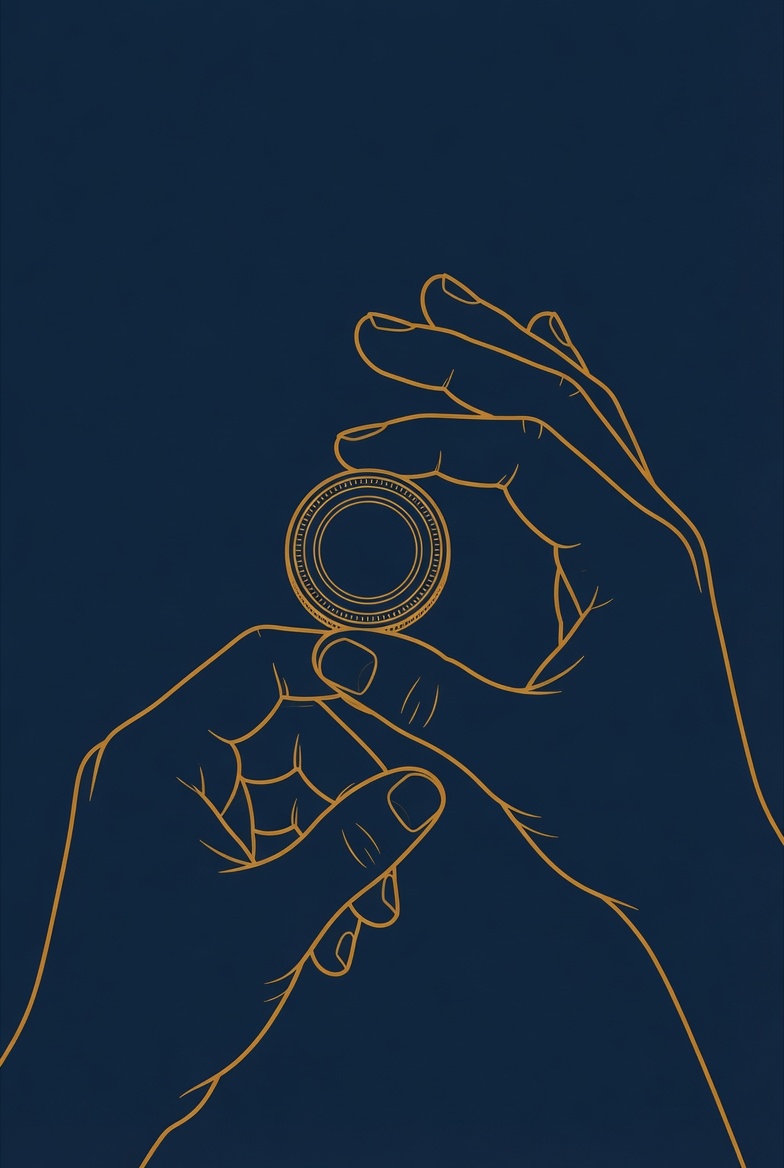
The free protocol above works with any object. The coin and the kit are for people who want to make it daily and structured.
Morning, five steps: (cold face splash, warm water in squat, sunlight walk, hero recall, implementation intentions), then you earn your coffee. Evening, 12 to 20 minutes: (warm foot bath with the ritual jar, catch-and-release visualization, two specific to-dos for tomorrow, cyclic sighs, sesame oil massage). Tap the coin to start each phase. Focus & Finish takes you through the first 21 days.
NFC coin, Warm Ritual Jar, sand timer, USB amber light, sesame oil, and a protocol guide.
One exercise per day. Each day targets a different relationship between the coin and your work. Twenty-one days to begin; most people need longer for a habit to hold, and that is normal.
AM activation stack after waking. PM deactivation in 12–20 min before bed. The morning stack wakes you up and the evening one winds you down.
The mOFC, dendritic spine retraction, and what skipping the pause may cost your sense of quality.
What flow state requires and why AI-assisted velocity may break the preconditions.
The developer who forgets what they were building.
Code carries the mood of whoever wrote it. What does it carry when nobody did?
Karpathy, Simon Willison, Addy Osmani and Mario Zechner, and METR, who ran the trial.
A literature review of the AI mandate: CEO statements (Pichai, Nadella, Lütke, Jassy, Amodei, Altman), worker testimony from Blind and Reddit, and the wellbeing programs that didn't catch it.